
Catering Guide
Types of Catering Services Explained
"Catering" isn't one service — it's a category that splits into very different formats depending on the event, the guest count, and how formal the occasion is.
Booking the wrong type for your event is one of the most common (and most avoidable) event-planning mistakes, usually because people default to "buffet" without considering whether their event actually calls for it. Here's a practical breakdown of the main types of catering services, what each one is actually built for, and how to tell which one fits your event.
Private & Personal Catering
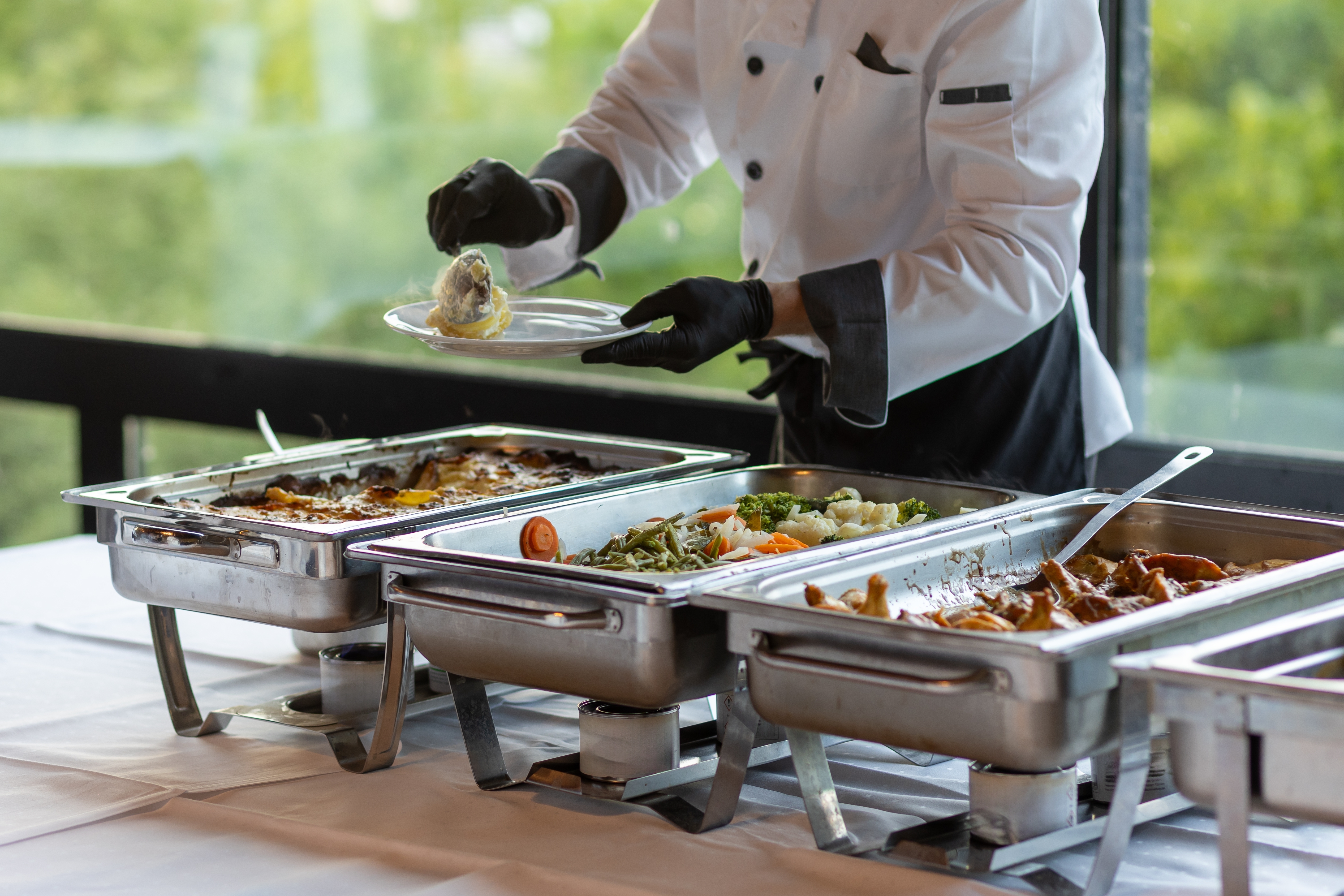
Built for smaller, intimate gatherings — family dinners, milestone celebrations, or get-togethers where the food should feel personal rather than mass-produced. Private Catering typically leans toward curated, family-style spreads rather than rigid formal courses, giving hosts flexibility on timing and presentation without the overhead of a large event setup.
Corporate & Office Catering
The defining feature of corporate catering isn't the menu — it's the timing. Office lunches, board meetings, and training sessions run on fixed schedules, so reliability matters as much as food quality. A late delivery to a wedding is an inconvenience; a late delivery to a client meeting is a problem. Menus here tend to be practical: individually packed meals, working lunches, or light buffets that don't interrupt the flow of a workday.
Wedding Catering
The most logistically demanding category, and usually the one with the highest guest counts and tightest schedules. Wedding catering has to coordinate around a ceremony timeline, multiple courses or stations, and often multiple cuisines to satisfy a mixed guest list. This is also where service style choices — plated versus buffet versus live stations — have the biggest visible impact on how the event feels.
Birthday & Baby Shower Catering
Celebratory, guest-of-honor-centered events where flexibility beats formality. Birthday catering and baby shower catering usually favor colorful, shareable spreads — think grazing tables and finger foods — over rigid plated courses, since these events are built around mingling, not sitting through a multi-course meal.
Cocktail Party Catering
Designed entirely around standing, mingling guests rather than seated ones. Cocktail catering relies on small, easy-to-eat portions served in rounds rather than a single buffet line, which keeps the room moving instead of clustering everyone around a food table.
Canapés & Desserts
A specialized subset worth calling out on its own. Canapés and dessert catering are often layered on top of another service style — added to a cocktail event, a wedding reception, or a corporate function — rather than used as a standalone format. The appeal is presentation: small, precise, visually distinct bites that photograph well and require no cutlery.
Live Cooking Stations
Instead of food arriving pre-plated, live stations put chefs in front of guests, cooking to order. It's the most experiential format on this list, and it doubles as entertainment as much as catering — but it needs more space and staffing than a standard buffet.
Yacht & Outdoor Catering
Both formats share one challenge: no full kitchen on site. Yacht catering works around limited galley space and a moving schedule tied to a route rather than a room, while outdoor catering has to account for weather, transport, and setup in a space that wasn't built for food service. Both require caterers who plan logistics as carefully as menus.
Seated / Plated Dinner Catering
The most formal option available, where each course is individually served rather than self-selected. Seated dinner catering demands the most precise timing and staffing of any format, since courses have to be paced to the room.
Why the Right Category Matters More Than the Menu?
Most catering disappointments trace back to a mismatched format, not bad food — a cocktail-style menu at a seated formal dinner, or a rigid plated service at a casual birthday party. NH47 Catering runs HACCP-certified kitchens with hotel-trained chefs across every format above, which matters if your event doesn't cleanly fit one category — many caterers specialize in a single style, while NH47 can match the format to the event rather than the other way around.
Conclusion
You must select the appropriate catering company, as this is an effective way to create an enjoyable event for you and your guests. Depending on how many guests you have and what kind of event you will have, you can choose from many catering services, such as buffet, plated dinner, food station service, cocktail reception, and drop-off catering.
If you do not know which of these catering services would be best for your event, then NH47 Catering is ready to assist you with that. Our team will take into account all the features of your event and provide you with recommendations concerning which service style you should choose.
Frequently Asked Questions
Q.Can I Combine Service Styles at One Event?
A.Yes — pairing canapés with a plated dinner, or live stations with a buffet, is common and often improves guest experience.
Q.Which Catering Type Works Best for 500+ Guests?
A.Buffet or live-station formats scale more efficiently than plated service at that size.
Q.Is Yacht Catering More Expensive Than Standard Event Catering?
A.Usually, due to space and logistics constraints — but menus can be scaled to fit different budgets.
Q.How Do I Choose Between Buffet and Plated Service?
A.Buffets suit casual, larger, or budget-conscious events; plated service suits formal, smaller, higher-touch ones.
Q.Can I Customize my Catering Service?
A.Yes. Most professional caterers allow you to customize menus, serving styles, and dietary options to suit your event and guests.
"Catering" isn't one service — it's a category that splits into very different formats depending on the event, the guest count, and how formal the occasion is. Booking the wrong type for your event is one of the most common (and most avoidable) event-planning
Copyright ©️ 2025 NH 47 Party Hall and Catering - L.L.C. All Rights Reserved.